
9 Energy Management Lessons From Performance Psychologists to Help You Outperform Your Peers Without Burning Out
Why managing your time better won’t get you promoted

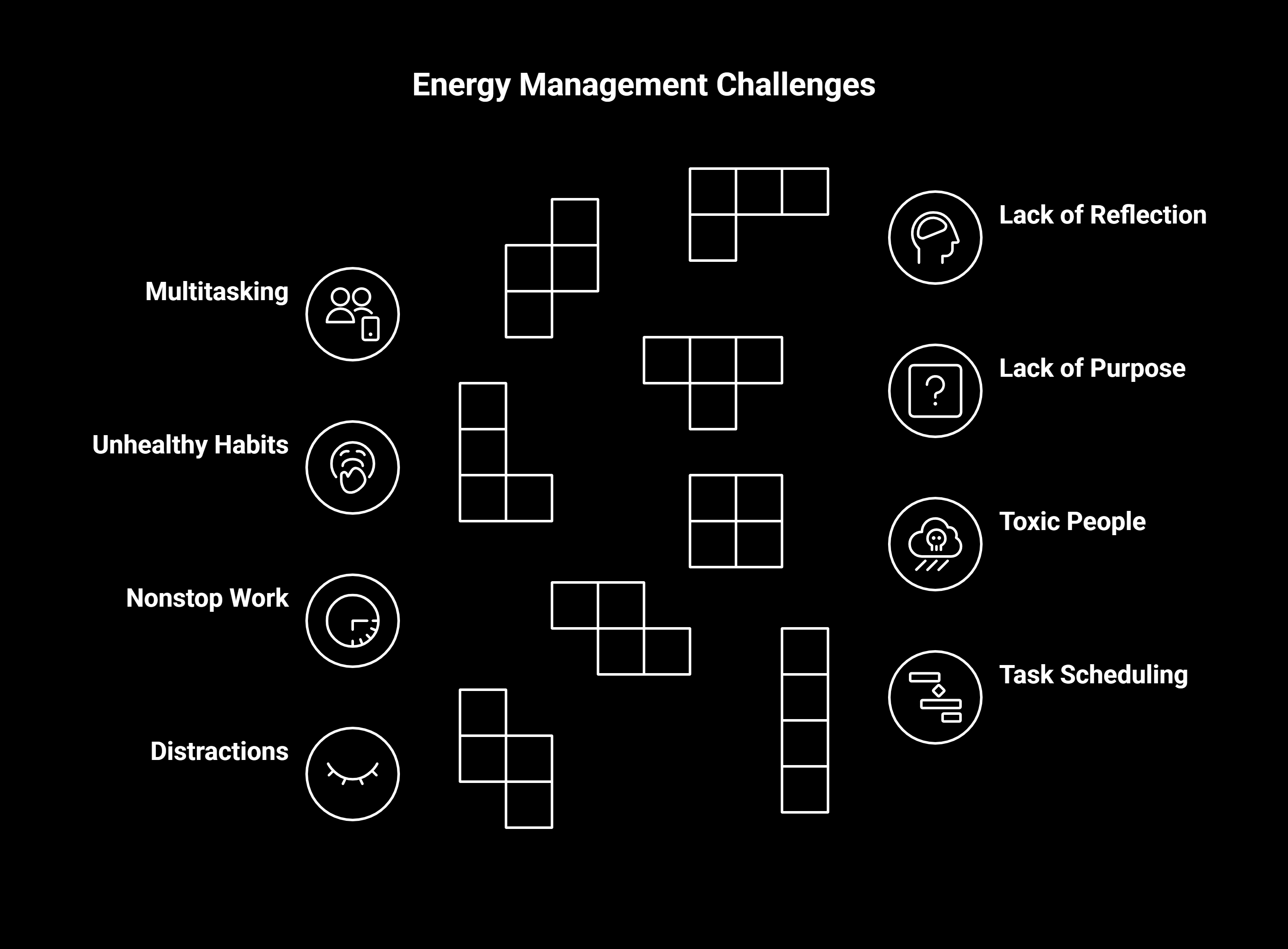
Have you ever had those days when you just don’t feel like showing up?
It might be that you’re lacking sleep, dealing with some personal problems, or just lost the excitement of showing up to your job. Whatever it is, though, we’re still expected to show up at work. Why?
Because that...is what you’re getting paid to do.
BUT forcing yourself to show up leads to exhaustion.
And when you’re exhausted, you tend to:
Miss those tiny but super important details.
Forget about your deadlines.
Become easily triggered.
Therefore, what do you do when your deadlines and deliverables are almost always screaming at you?
Most will say, “Get better at time management”. But as per performance psychologists (Jim Loehr and Tony Schwartz), it’s about “energy management”. Together, they wrote the book The Power of Full Engagement, where they talk about how individuals protect their energy, raise their performance, and stand out from the average.
Here are the 9 lessons from the book you can start practicing today:
Lesson 1 - Energy beats time.
What’s common between you and the highest performer in the world is that both of you only get 24 hours in a day. The difference, however, is how you manage your energy. High performers are efficient, while your typical employee tends to waste energy on unimportant details. But I totally get it, distractions at work are unavoidable. Your move?
Take a step back and recharge at least 5 minutes every once in a while. You can stretch, breathe or walk—any activities that allow you to fully disconnect from what you’re doing.
Lesson 2 - Each task drains a different kind of energy.
Meetings burn a lot of emotional energy. Reports, on the other hand, drain your mental energy. Your workaround would be to map out your day so you know when to take a 10-minute break. Doing an emotionally draining task, then following it up with a mentally draining task, can make you feel drained by noon. Therefore (as much as possible), don’t butt these two types of tasks together in your schedule.
Here’s how I structure mine:
All mentally draining tasks are done in the morning (because that’s when I have the most energy).
All emotionally draining tasks are scheduled right after 10 AM.
Side Note: How you structure your day should depend on your energy levels on that given day.
Lesson 3 - Working nonstop makes you slower.
Your brain’s focus fades after 90 minutes. Short breaks keep quality high. Your move? Schedule two “micro-breaks” at 5 minutes each. No screens. Just stand up, stretch, and look out a window.
Lesson 4 - Protect your emotions
Toxic people have a tendency to quickly drain your energy. This is exactly why I avoid confrontations. Sometimes, even when you’re right, it’s not worth the battle. My time is better spent somewhere else.
